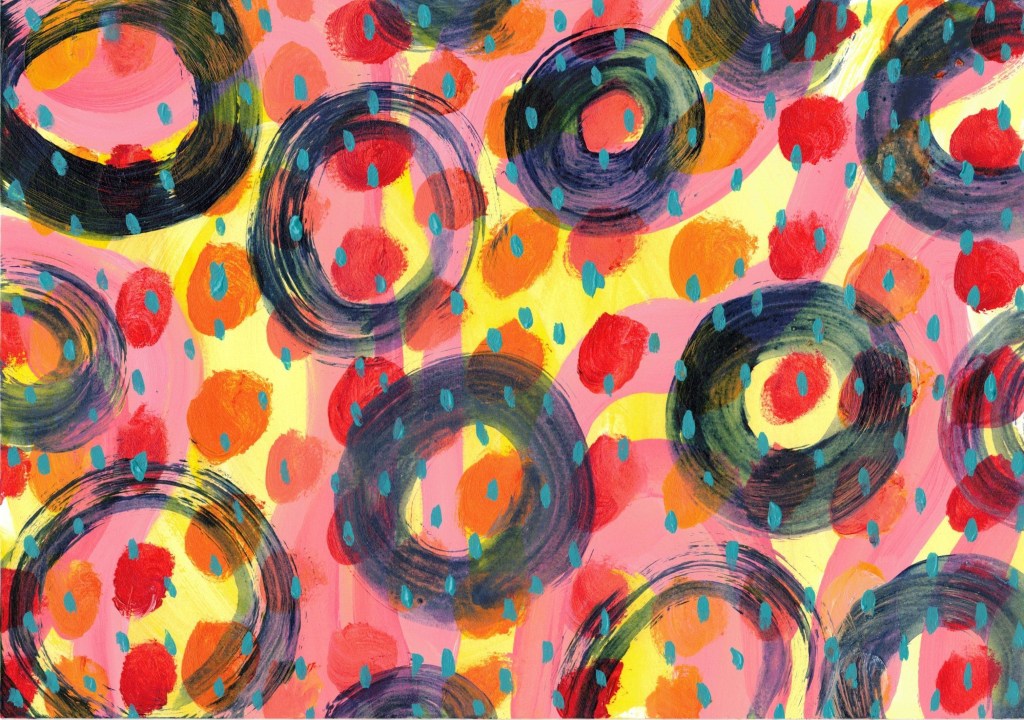
Making art can be fun, but it can also be stressful if you’re worried about making mistakes or don’t know where to start.
Creative play jumpstarts the creative process by finding ways to begin that are low stakes. It permits us to try new materials and techniques without the pressure of achieving a certain result. Play is just play. There are no right materials, no right way of making, no set conclusions.
In play, the focus is on enjoying the process and seeing what emerges. When you arrive at an end point, you can add a new variable to open the next set of possibilities. Framing experimentation as play bypasses our inner critic so we can go further, faster.

One of my go-to exercises is to play with patterns. Here are three ways we’ve been playing with patterns in the Profoundly Creative membership group. Each of these fun exercises uses simple materials and opens the door to endless variation and experimentation.
1. Repeating marks
Choose a crayon, pastel, piece of chalk or charcoal that feels pleasing in your hand. Take a piece of paper and start making a range of marks across the page. Notice what feels natural. When you’ve filled the page, take a step back to look at it.
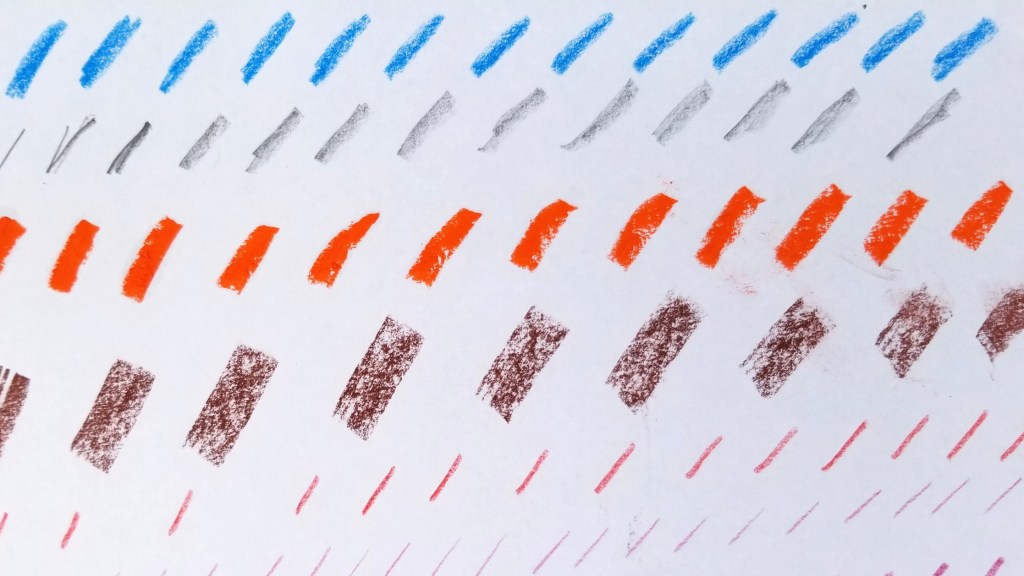
Next, choose one type of mark from your page that you really like. On a new piece of paper, make that mark over and over again. Fill the page.

Now, think about a new mark or shape that you could add to the first mark that would either complement it or stand in contrast to it. You can add that new mark by using an eraser over the marks you’ve already made (see the “x”s in the image above), or choose a new colour of the same material, or try a new material.
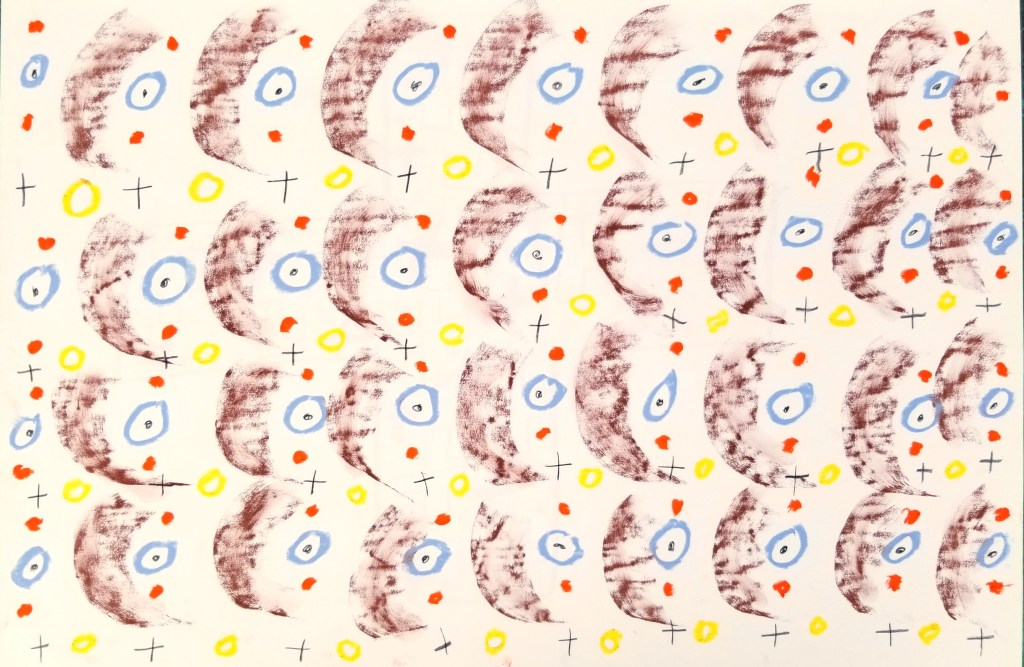
Remember, there is no right way to play. Keep adding to your page until you feel like it’s done. Start a fresh page if you want to switch gears.
2. Cut paper shapes
To play with patterns made from cut paper shapes, gather a few sheets of coloured paper and a pair of scissors.
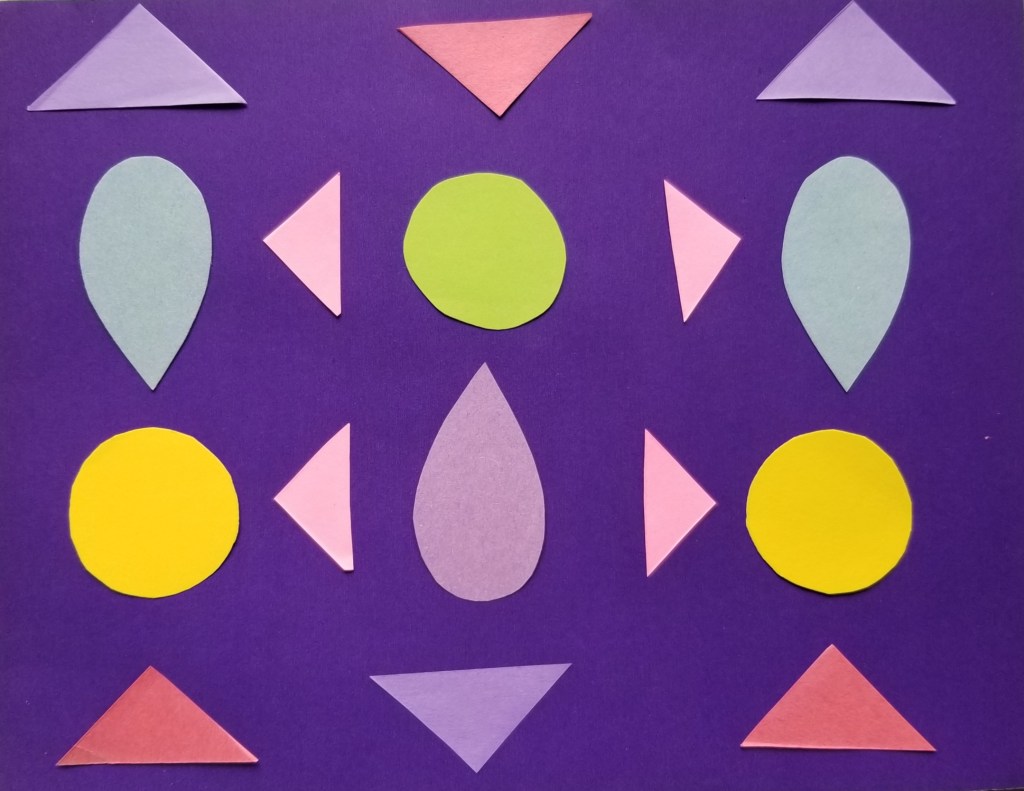
To start, cut a strip of paper and fold it into triangles. Open your paper and cut along the fold lines. You should now have a set of triangles that are all roughly the same size. Using a similar method, cut out a variety of shapes in different colours of paper: squares, diamonds, rectangles, stars, circles, crescents. You can also trace and cut out organic shapes. The goal is to have a variety of repeated shapes in different colours and sizes.
Once you’ve cut out your shapes, you’re ready to play. On a piece of paper or table, spread out one type of shape into a grid or circle. Next, choose a different shape or colour and add that to the pattern.

As you add more shapes, move the cut pieces of paper around, trying different formations. How many patterns can you make? Try layering shapes on top of each other. You can also cut out new shapes as you go.
Once you’re done playing, keep your paper shapes in an envelope for future play. This exercise is a great tool for playing with composition and colour combinations when working on other projects.
3. Printed patterns with fruit and vegetables
At its most basic, printmaking is the act of taking an object, adding ink or paint to one side, and pressing the inked side of the object on a piece of paper to make a mark or impression. You can use a rubber stamp and an ink pad, but you can also rummage in your fridge to find beautiful materials to work with.
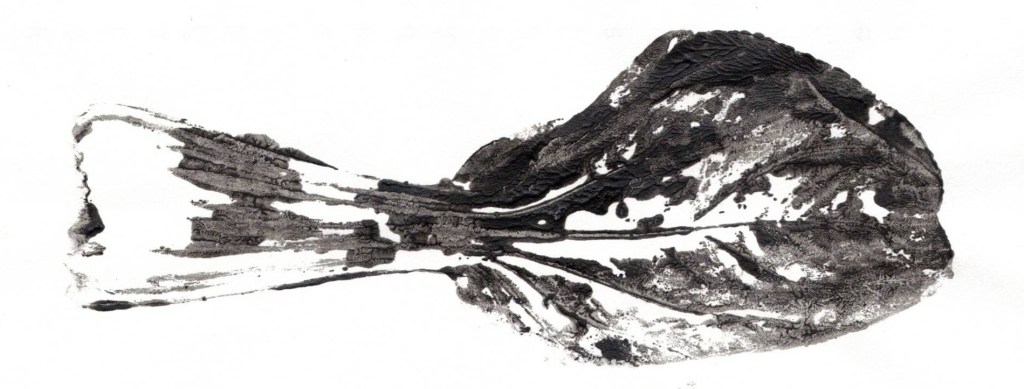
Fruits and vegetables that make great prints tend to be somewhat hardy, with interesting edges, sections, or patterns when cut. You can also ink and press flat leaves like herbs and some greens.
To prepare your fruit or vegetable, first look at it to decide which part you would like to print. Place it on a cutting board and use a sharp knife to make a clean and even slice. You want to end up with a nice flat surface to print with. Depending on the size of your fruit or vegetable stamp, you can either dip it in paint or ink, or apply the paint/ink with a brush.
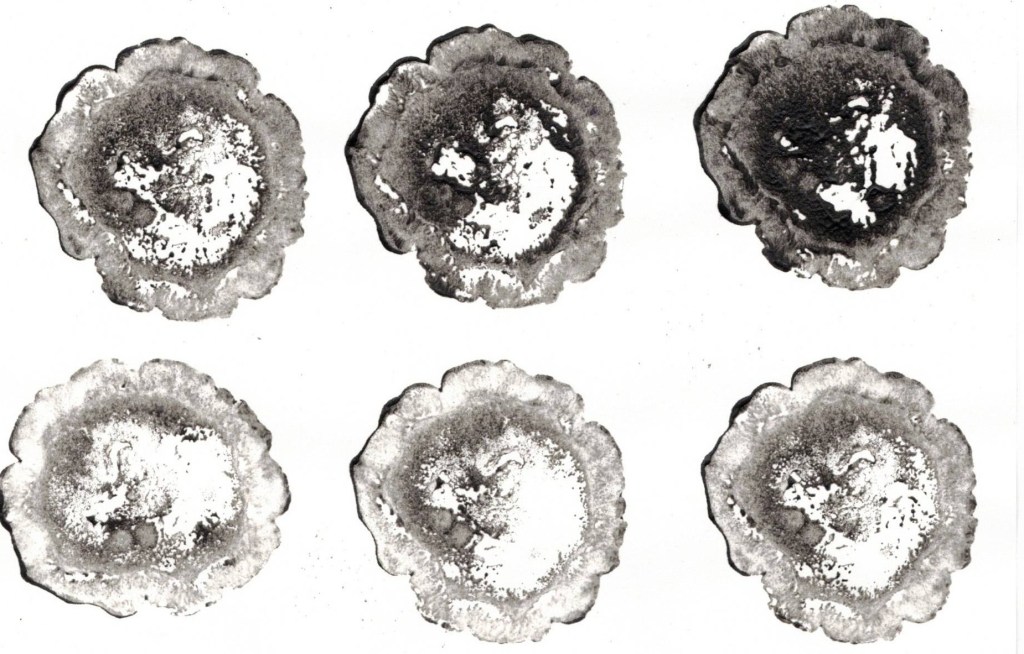
Try making a few impressions on a piece of paper to see how much paint/ink makes the best impression, and how much pressure to use as you print.
If you’re printing a leaf, carefully brush or roll paint/ink on the side you want to print with. Gently turn it over on to the page. Take a second piece of paper to cover the back of the leaf, and then press down on the paper. Gently lift the paper and leaf from the bottom page to reveal your print. This technique allows you to print evenly while not transferring ink or paint from your hands to the page.
Once you’ve had a bit of practice, play with combining prints of different items to make a variety of patterns.

Let me know in the comments if you have other fun ways of creating or playing with patterns. I’m also curious to learn how you incorporate creative play into your life and work.



 Profoundly Creative
Leave a reply to suevohanka Cancel reply