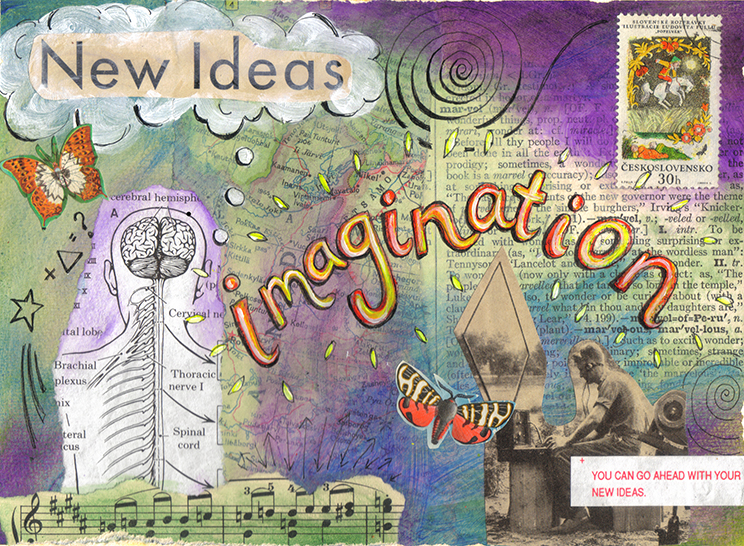
Have you ever stared at a blank page feeling lost, uninspired or overwhelmed?
Two pieces of good news:
- You’re not alone—pretty much every artist and writer in the history of the world has struggled at one point or another to find ideas or a way to start their projects.
- Because this is a common problem, creatives have come up with myriad ways to generate ideas and get unstuck.
The worst thing you can do in these situations is to wait for inspiration to strike. The best and most productive thing you can do is to pick up a pen and make a mark on the page.
If you’re a visual artist looking to make something, draw a squiggle or a line, and then respond to what you see by adding to it. Before long, your visual brain will kick in and you’ll be engaged in the act of making.
If you’re a writer, open the dictionary and write down some random words on the page, and then try to make associations between them. Keep going until your brain starts to see patterns or characters or stories emerge. It works.
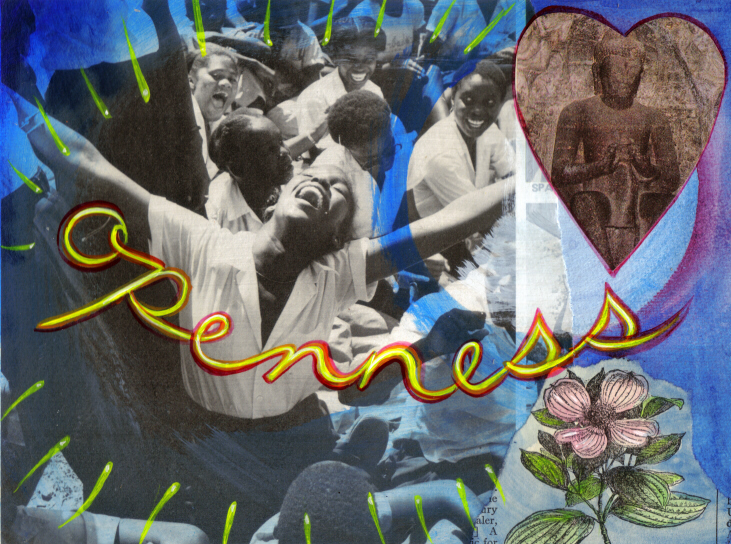
Another great tool for generating ideas is to make lists and mind maps. These processes can help you identify your interests and passions as a source for ideas, and show you how to generate multiple ideas about any subject. For instance, my Words to Live By project started with making a list of all the words I could think of that are positive and action-oriented. I then chose one word per week and made a mixed media postcard about it. That project kept me going for a year!

The first step is to choose your subject area. If you’re unsure about what subject you want to start with, choose yourself as the subject, and explore your interests and passions. You’ll soon be able to see what areas generate the most energy and associations—this is a good indication of a key subject for you to focus on.
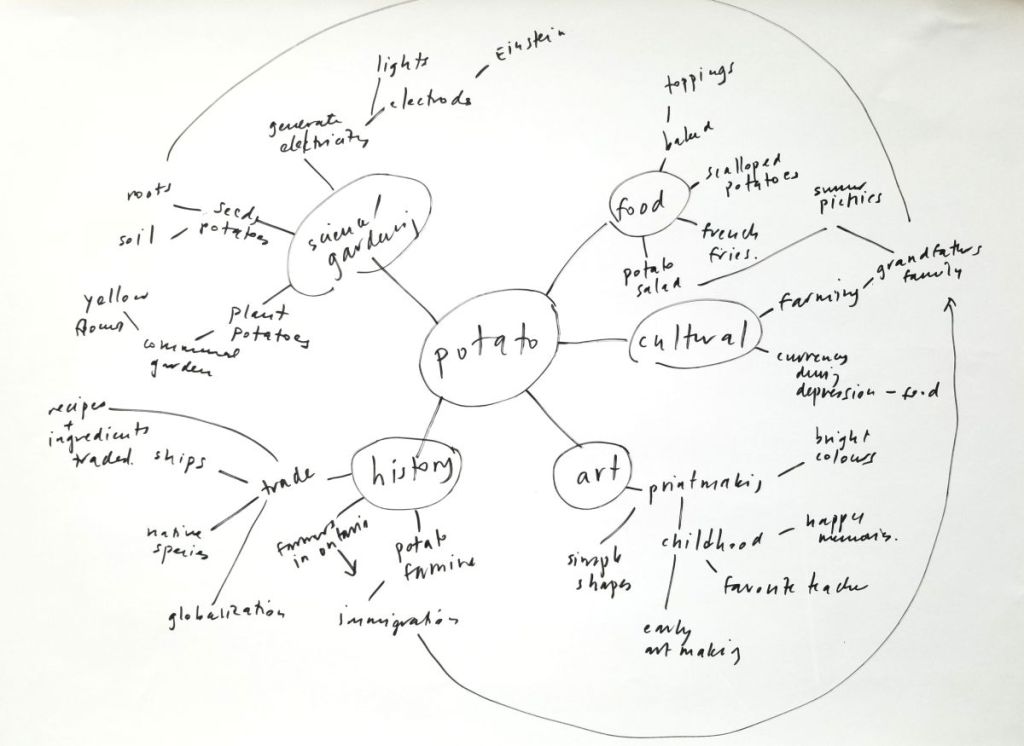
To create a mind map, take a large piece of paper and write your subject in a circle in the centre (see potato above). Draw spokes coming out of the circle, and add words that describes different aspects of the subject. Then, keep going by adding words and ideas associated with the concepts in each spoke. By the time you get further out in your mapping, your mind will light up around certain associations and ideas. These ideas may be rooted in memories, stories, feelings or subject areas that spur further exploration. They are the golden nuggets to focus on as your work takes shape.
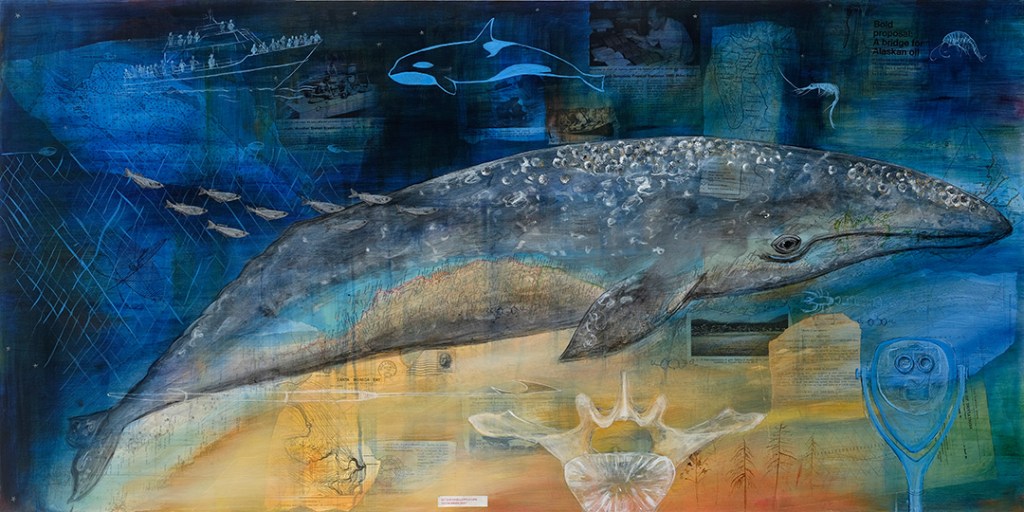
Here’s an example of how I’ve used a mind map to develop ideas for artwork. A few years ago, I wanted to create a painting about grey whales. I drew a mind map to help me organize my thoughts and generate ideas about directions I might take the project.

Once I had the ideas down, I could then visualize the elements I wanted to include in the painting—a map of the west coast of North America, references to the whale’s food web, Indigenous connections to grey whales, and threats to the whales from industry and human activity. The final painting almost looks like a mind map too!
Mind maps are a useful tool for generating ideas no matter what field you’re in. In addition to artwork, I’ve used them to map out ideas for corporate conferences and events, exhibitions, and writing projects. The process of mapping always generates connections and associations that I wouldn’t have otherwise thought of or seen.
I’d love to hear in the comments how you’ve used mind mapping in your work. If you’re trying one for the first time, can you see it being a useful tool in for generating new ideas?


 Profoundly Creative
Leave a comment